
RDMA 基础概念
RDMA 基础概念
晨茗一、基础概念
1. QP — Queue Pair
RDMA 通信的基础,其中包含了一个 RQ 和一个 SQ。基于连接的 QP 只能一对一交流,而基于数据报的非连接通信能实现 QP 一对多通信。
2. RQ — Receive Queue
存储了接收的 WQE。
3. SQ — Send Queue
存储了发送的 WQE。
4. CQ — Completion Queue
存放通信完成的信号,其中存放的每个实体较说 CQE — Completion Queue Entry。
5. WQE — Work Queue Elements
用于下发操作指令,一般是放置在 RQ 或者 SQ 中,其大小受多种因素影响。
6. MR — Message Region
用于记录从主机内存中分配来的内存,可用于之后传输数据和接收数据使用。
二、动作原语 (Verbs)
1. 内存交互原语
- Read
- Write
这类原语需要提前知道对端主机里要被操作的内存地址(相对地址,基于virtual address),同时它无需对端主机 CPU 的参与。
2. 消息交互原语
- Send
- Receive
这类原语无需知道地址,Send 操作会将消息写到对端通过 Receive 操作声明的内存中,对端声明地址时需要 CPU 参与。
三、传输方式
1. 基于连接
RC — Reliable Connected
NIC 会使用确认机制来保证按顺序传递消息。
UC — Unreliable Connected
不可靠连接不保证消息顺序,但 InfiniBand 提供了链路层的流控制,保证极少丢包。
2. 无连接的
UD — Unreliable Datagram
使用较少,但可以实现广播
3. 对 Verbs 的支持
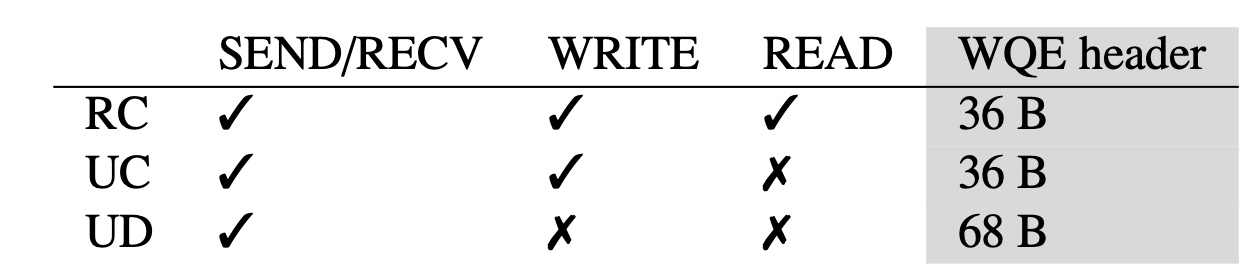
四、传输流程
这里使用 Send 和 Recv 作为示例进行介绍,常规 RDMA 编程还需提前建立连接、协商地址等过程,这里进行了省略,详细可参考 RDMA_CA 的使用。
1. 开辟内存空间
RDMA 操作开始于“搞”内存。当你在对内存进行操作的时候,就是告诉内核这段内存名花有主了,主人就是你的应用程序。因此我们要先注册一个内存区域(MR)。一旦 MR 注册完毕,我们就可以使用这段内存来做任何 RDMA 操作。
1 | struct ibv_mr { |
2. 创建 WQE (send / recv)
有了内存下面就可以进行传输了,首先发送端应该在 SQ 中创建一个 WQE 或者叫 Work Request,并使用 sg_list 指定需要传输的缓冲区地址。
1 | struct ibv_send_wr { |
对应的接收端也要创建一个 WQE 用于接收。
1 | struct ibv_recv_wr { |
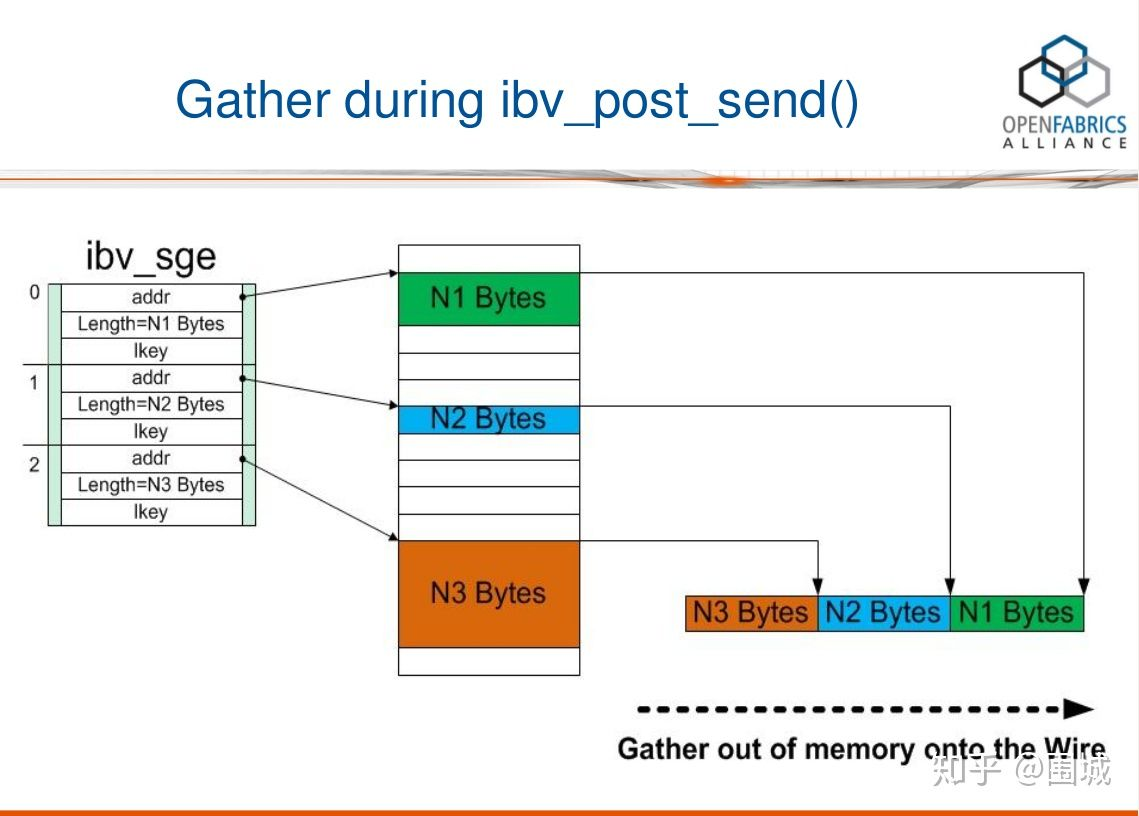
RDMA编程中,SGL(Scatter/Gather List)是最基本的数据组织形式。 SGL 是一个数组,该数组中的元素被称之为 SGE(Scatter/Gather Element),每一个 SGE 就是一个 Data Segment (数据段)。RDMA 支持 Scatter/Gather 操作,具体来讲就是 RDMA 可以支持一个连续的 Buffer 空间,进行 Scatter 分散到多个目的主机的不连续的 Buffer 空间。Gather 指的就是多个不连续的 Buffer 空间可以 Gather 到目的主机的一段连续的 Buffer 空间。
1 | struct ibv_sge { |
3. 添加任务
之后需要将任务添加到对应的 QP 中,让网卡去执行,需要使用 ibv_post_send() 函数
1 | int ibv_post_send(struct ibv_qp *qp, |
4. 网卡执行
根据 sg_list 字段网卡驱动便可以知道需要操作的内存地址,之后即可进行内存操作,同时为了防止不同主机操作本不属于它的内存,又出现了 PD 这个概念。通过 PD 可以将 MR 与 QP 进行绑定,通过网卡驱动硬件上防止内存被错误访问到。
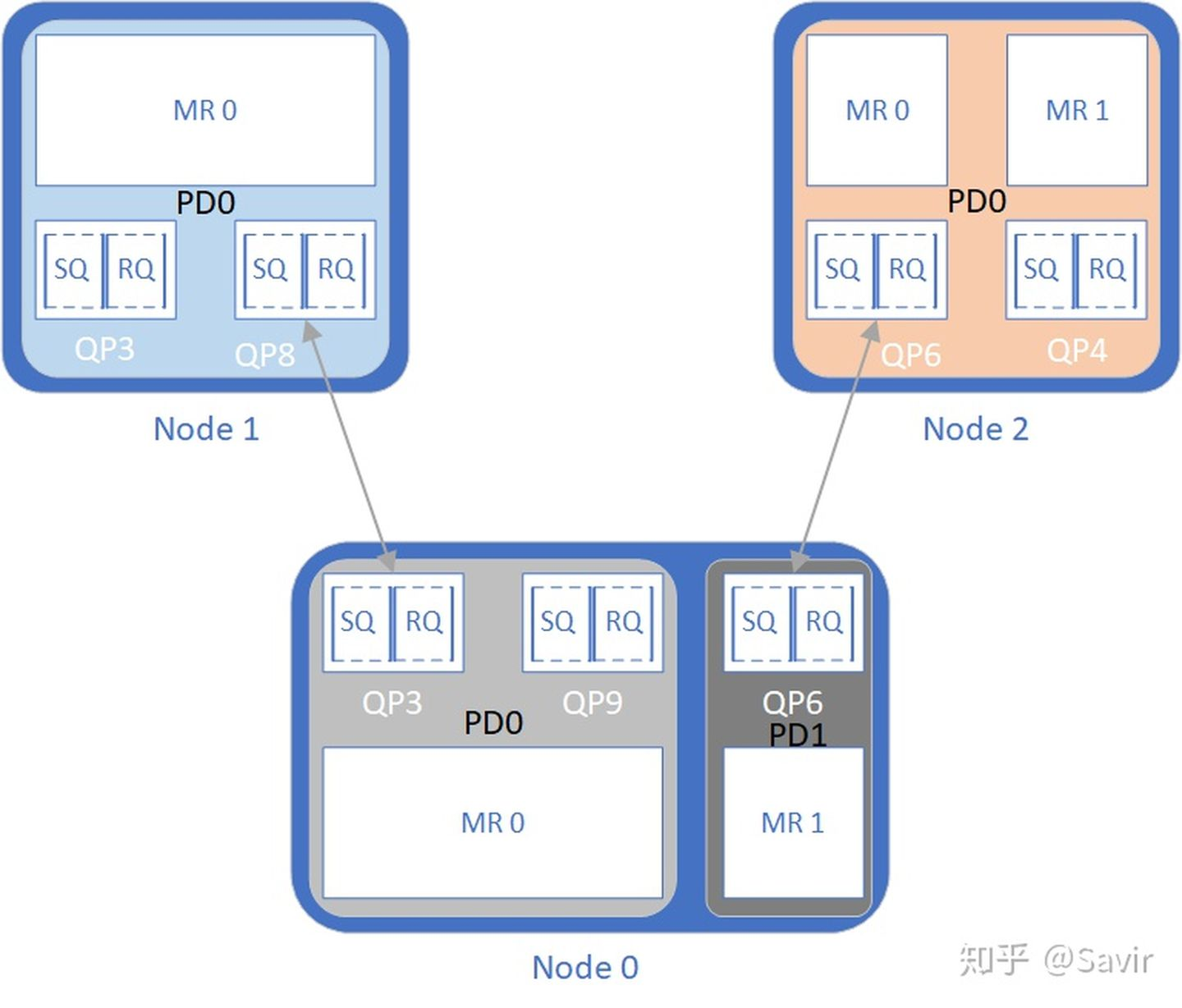
网卡检验 PD 后便可以通过 SGL 组合内存,进行数据传输。





%20%E6%9C%8D%E5%8A%A1.jpeg)